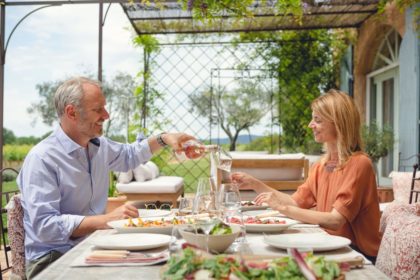
Travelling far and wide to try new restaurants, tasting fine food and writing about it afterwards to make a living? Being a food writer – especially in France, the home of gastronomy – surely ranks highly on any list of dream jobs. I was commissioned by the Guardian to spend a day in Nice with Jon Bryant, a prominent food and travel writer, to illustrate a feature entitled ‘Mediterranean food photography journey‘. My photography was intended to whet the appetite of foodies in colder, wetter climes, and inspire their holidays – as many editorial travel features do. Yet in this case, the feature aimed to inspire trips specifically anchored in a Marriott hotel, and paid for by an Amex credit card. Welcome to the world of the advertorial.
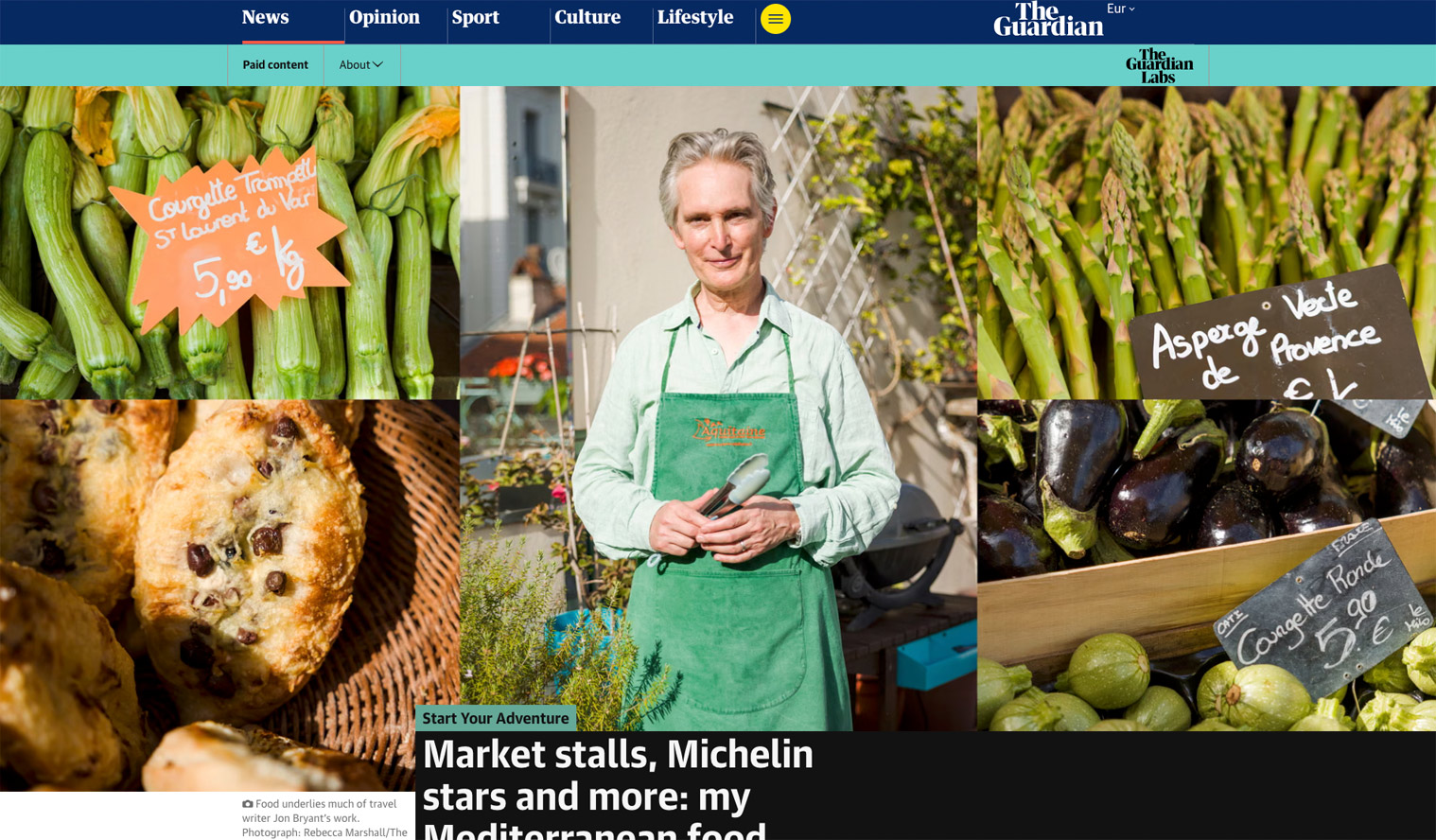
Mediterranean food photography, brought to you by Marriott Hotels and American Express
For those unfamiliar with the term, an ‘advertorial’ is a newspaper or magazine article that is presented in the style of an objective journalistic feature, but is in fact an advertisement, funded by one or more brands. Jon wrote this particular piece about his life as a Mediterranean food writer, sharing hot restaurant tips of the moment and discussing why food and photography enrich any travel experience… before plugs for Amex and Marriott Hotels were then smoothly woven through that text. My job as photographer was to make an environmental portrait of Jon and pictures of his daily life as a foodie in the South of France, with oh-so-French fresh ingredients aplenty.
Aspirational French Riviera living
We began the day in the house that Jon shares with his novelist wife (another dream job, surely). If one were to picture the French Riviera home in which one’s food writer alter ego might live, it might just look a little like this. The architectural equivalent of a genteel, elderly dame, this elegant Belle Époque house is dwarfed by neighbouring blocks of flats, yet its rooftop garden must be the envy of every apartment overlooking it. Carefully renovated, with respect for its old Niçoise glory, the house’s interior was furnished with objects acquired during exotic travels, perhaps, or from local discerning antiquaires. That morning, the lounge seemed to offer a warm invitation to sit, legs drawn up into the velvet of a Louis XVI-style chair, with a good book and a cool orange pressée, memories from across the Mediterranean gently blowing in through the tall, open windows…
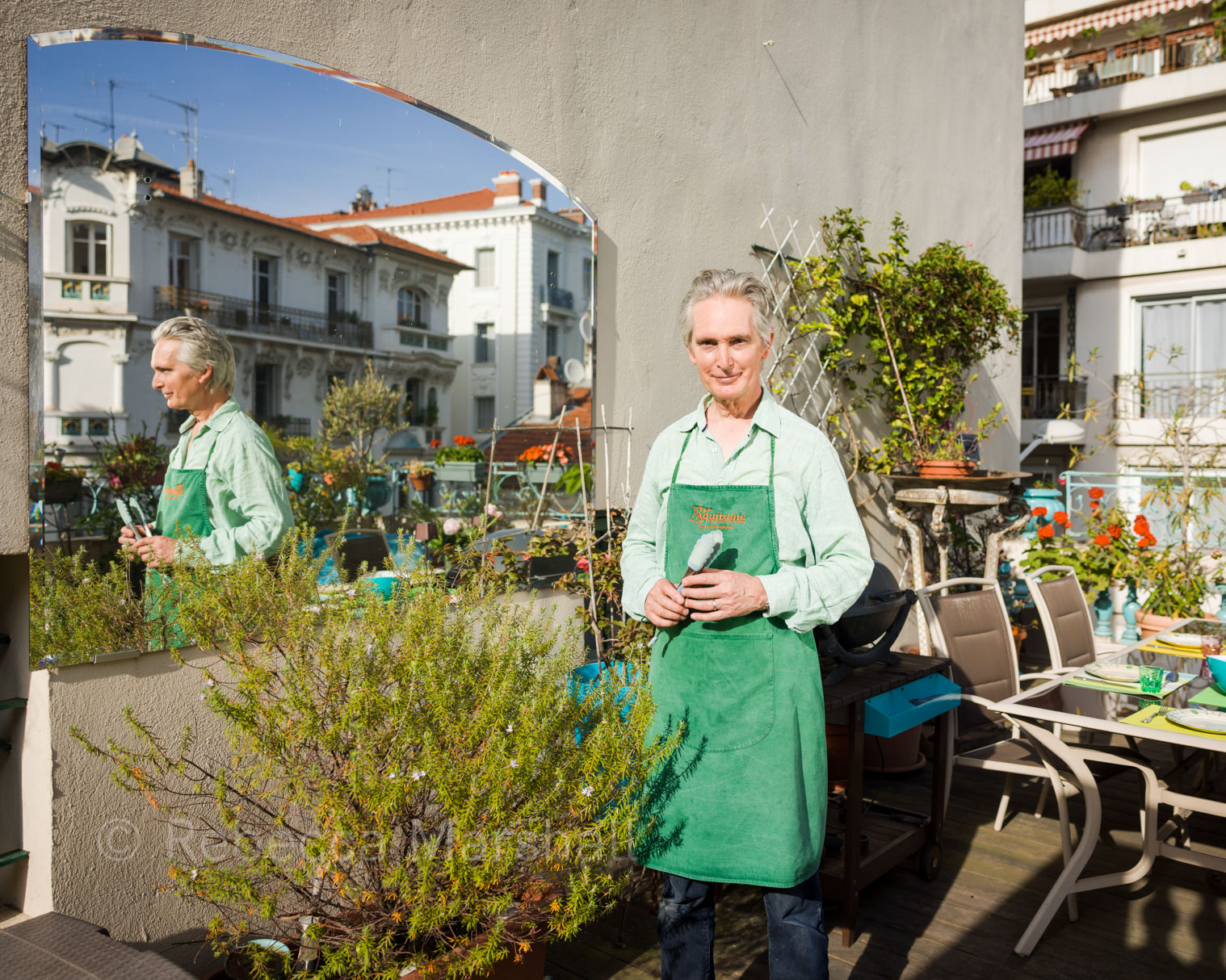
Jon ‘ready’ for a 10 am BBQ on his rooftop terrace
Photography direction to ‘keep it natural’
However, I was there to capture a dream, not step into one. The Guardian Labs photo editor had sent over a comprehensive shot list, and our first set-up was on the rooftop. Jon was to be pictured in the sunshine, wearing an apron as if preparing a BBQ, the table set for a sumptuous meal for his guests. Summer morning sun in the South of France is better imagined than photographed, though, and Jon struggled not to squint as its harsh rays bounced off the bright, white surfaces all around.
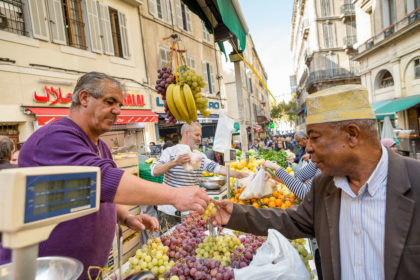
We then picked out his most appealing, brand-free, shopping bag and set out to walk Rio, Jon’s oh-so-French-Riviera, small, fluffy dog, to Cours Saleya. Here, at Nice’s best-known market, overpriced vegetable and flower stalls jostle with souvenir stands in a colourful shopping heaven for tourists. Yet there is still just enough local produce present – and even the odd chef doing a spot of emergency shopping – to make it ‘authentic’. Jon smelled fresh produce – and I photographed it. Vibrant fruit burst out of punnets – and I photographed it. Jon chatted with friendly market sellers – and I photographed it. “Nothing too “acting” – please keep it natural and not too smiley in every shot”, the picture editor had requested. This kind of ‘natural’ still takes directing on the part of the photographer (“another peach sniff please, but one step to the left, so you’re not in the shade“); framing (to leave a table creaking under the weight of mass-produced Provence purple face towels out of shot); and patience (waiting for other shoppers wearing masks or tasteless board shorts to exit the frame). Yet the material was real enough.

Peachy
Hot tips and a photogenic knife
Insider information is often a perk of my job as an assignment photographer (I discovered the oldest socca establishment in Nice on an assignment for GEO; experienced first hand the joys of Marseille’s melting pot cuisine on a cover shoot and a stylish London magazine sent me to Saint Tropez to shoot the makers of the eponymous sandal). Yet exploring your home city with a leading travel writer alongside is a rare treat. Not only did I get the lowdown on the hottest restaurants of the moment, but I acquired a wonderful new kitchen implement. As we made our back from the market, Jon pointed to a small side street, and said, “Do you know the little knife shop down there? It’s wonderful.” I didn’t – and instantly wanted to (being someone who particularly appreciates a good knife). There, in the window, I spotted the most beautiful little Japanese number, complete with cherrywood handle and case. But handwritten price ticket must’ve been confused with another – it was far too cheap. On a whim, I popped inside anyway. The sales advisor told me the price was actually correct and that he, too, was astonished that such a fine tool could be sold so cheap. Once in my hand, the knife simply didn’t want to return to the display. Jon and I pushed, “buy props if you need” to its logical conclusion. The next stage of the photography would be to focus on him preparing vegetables in his kitchen, and, as he said, his own knives weren’t photogenic, at all.
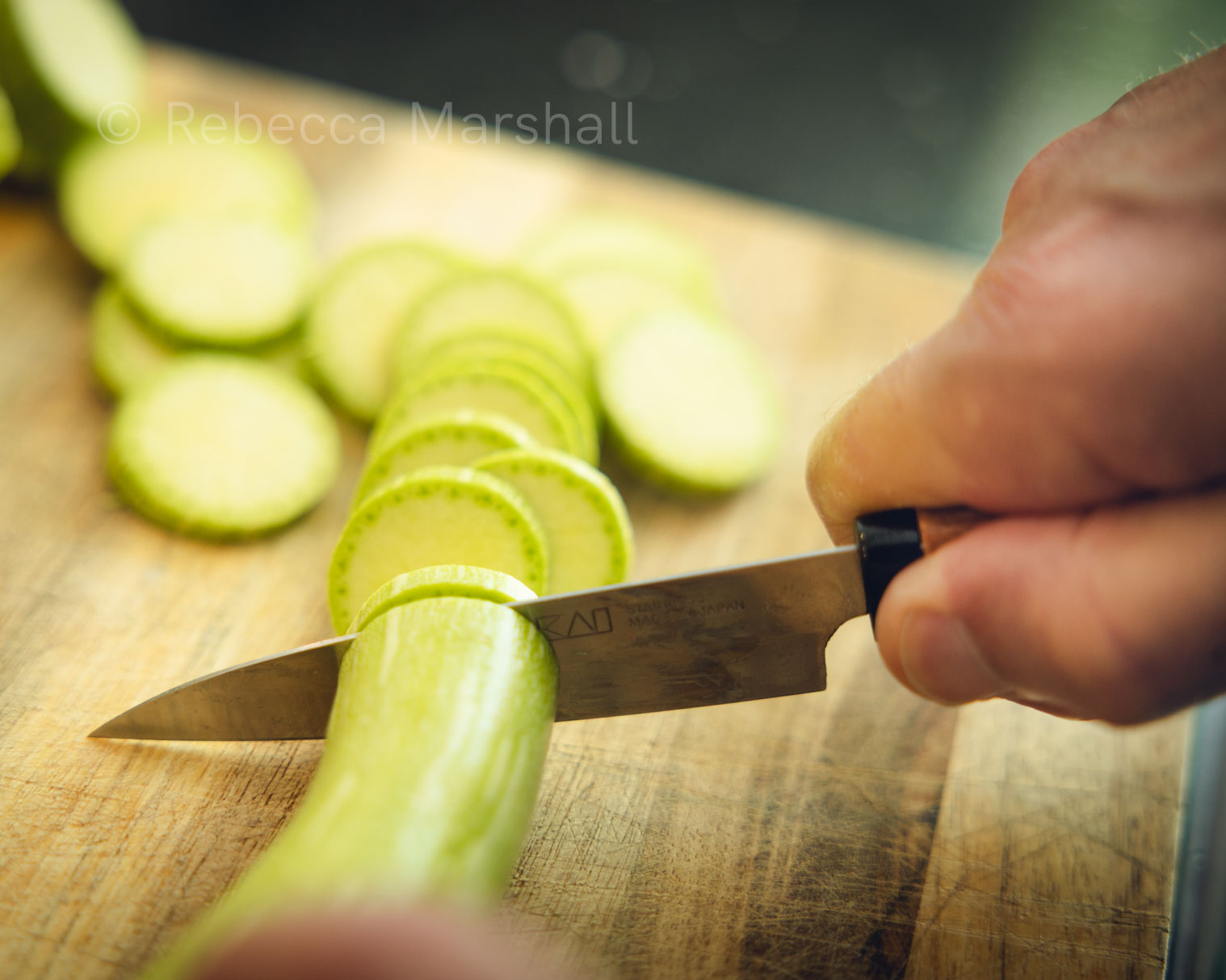
A most photogenic knife
Tight squeeze in the kitchen
It turned out that the most challenging place for me to capture Jon’s inspiring foodie lifestyle was… his kitchen. Clean, white and functional though it was, it wasn’t quite the cuisine space that had been outlined to me…by the photo editor in London (who had never seen it). A narrow, galley-style kitchen, it was surprisingly dark and very quickly filled by Jon, Chloé, my assistant, and I. As Jon enjoyed the novelty of new Japanese steel and started to prepare his market-fresh vegetables for a dinner party later (he had done what anyone with a dining table elaborately laid for a photoshoot and a basketful of produce props would do, and invited a bunch of friends around), I squashed and squeezed myself into the corner of the kitchen. Chloé perched precariously on the worktop and flattened herself against the wall to provide the lighting.
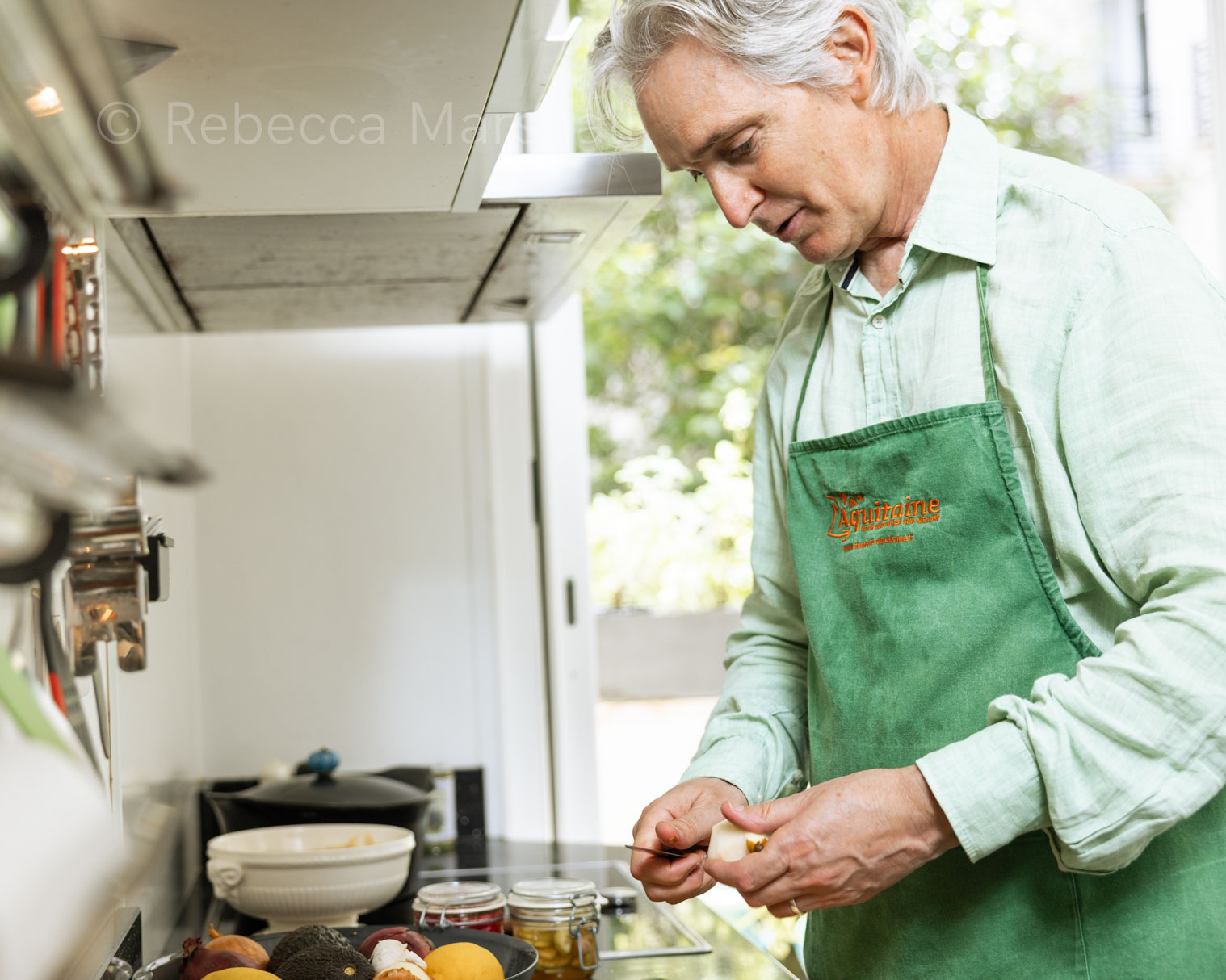
Captured from inside a cupboard
Crema al moscatello
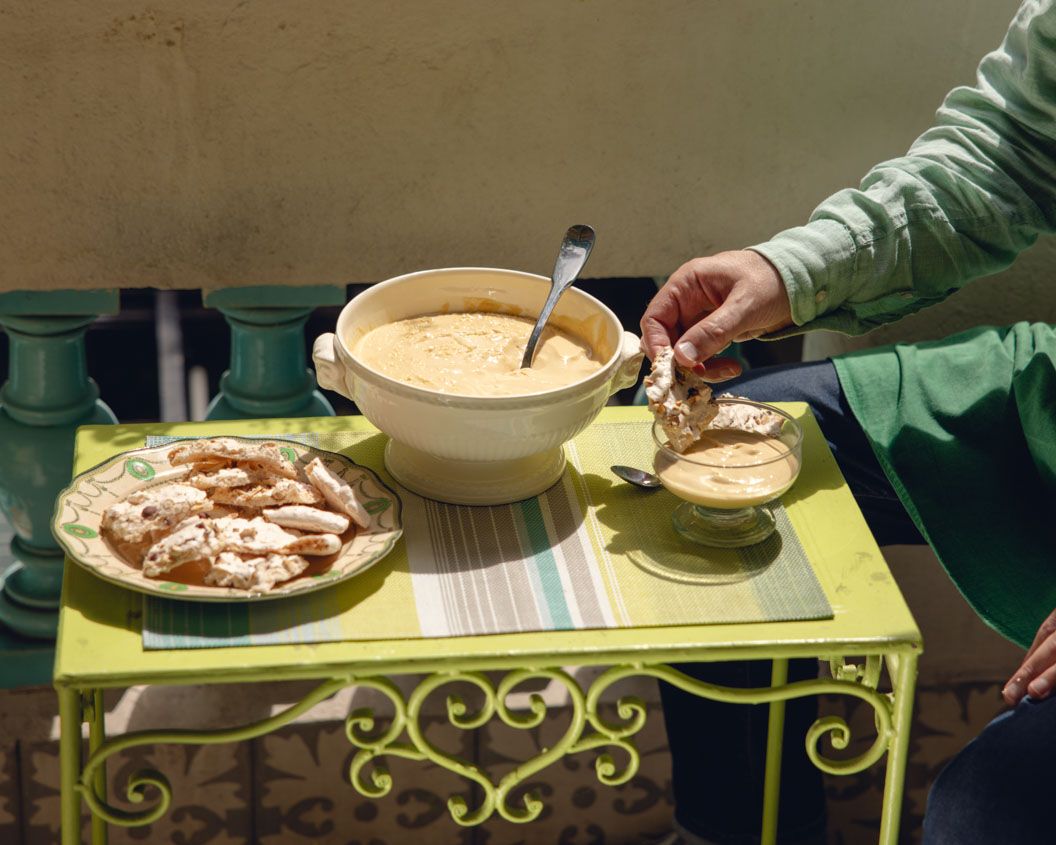
The last shots I made were of Jon, sitting on his balcony in the shade of a kumquat tree, putting the finishing touches to the evening’s dessert. Chloé and I, given the ultimate joy of licking mixing bowl spoons, confirmed that his Crema al moscatello (whipped cream, flavoured with sweet wine and served with meringue and hazelnut biscuits) was just as delicious as it looked. I wondered whether Jon’s friends would, perhaps as they tasted this treat later, raise their eyebrows and laugh uproariously at the idea of him enthusing about staying in Marriott hotels and flashing his platinum card, as he predicted (“They know me too well to believe that!“). Yet, after a dinner of home-cooked Mediterranean dishes and fine local wine, with the sun setting over the rooftops and the scent of fresh herbs releasing their joys into the dusk air, this detail would be unlikely, I thought, to tarnish Jon’s integrity, and the authenticity of the moment.

Hazelnut biscuit finishing touches to the Crema al moscatello