Benoît hasn’t always been a baker. His fingers, which carefully shape 40 loaves a day, used to bash away at a computer keyboard for 40 hours a week, in a large office. ‘Néo-ruraux’ is the commonly used label for people who abandon urban lifestyles to make a go of it in the country, and Benoît could be considered one. Two years ago, he quit his job and retrained to become one of the oldest tradesmen of them all: a baker. Today, he and his baking partner Mathieu work with wild yeast, favour ancient varieties of flour, grow their own wheat, and live life at a slower pace. Even if their bakery has neither name nor shop, they produce, from an isolated, rural workshop, what some say is the best naturally-leavened, organic bread in their corner of Provence.
It’s all in the length of the queue
I discovered the bakery on a dreary, drizzly March morning in Digne-Les-Bains. The market was buzzing – the only spot in this quiet rural town that was. A photogenic, sunny South of France scene it was not: between stalls piled high with a limited selection of muddy, end-of-winter vegetables (leeks, turnips and apples were enjoying a rare moment of popularity), raincoated locals greeted each other and sipped coffee on the move to keep warm. I was staying nearby and disappointed by the local bakeries (yes, living in France has made me ‘particular’ about bread). So when I spied a little stall loaded with rustic-looking loaves and a considerable queue in front, I paused. Each customer seemed to have brought their own bread bag (fortunate, since there seemed to be none behind the stall, branded or otherwise) and no-one seemed in any hurry – good bread being worth the wait. Instead of a sign above the stall, a small blackboard announced ‘Pain au levain‘ [naturally leavened bread]: organic, baked locally in a wood-fired oven and ‘good for both digestion and the climate‘ (this ‘néoruraux‘ sort of message was punctuated by an emoji wink).
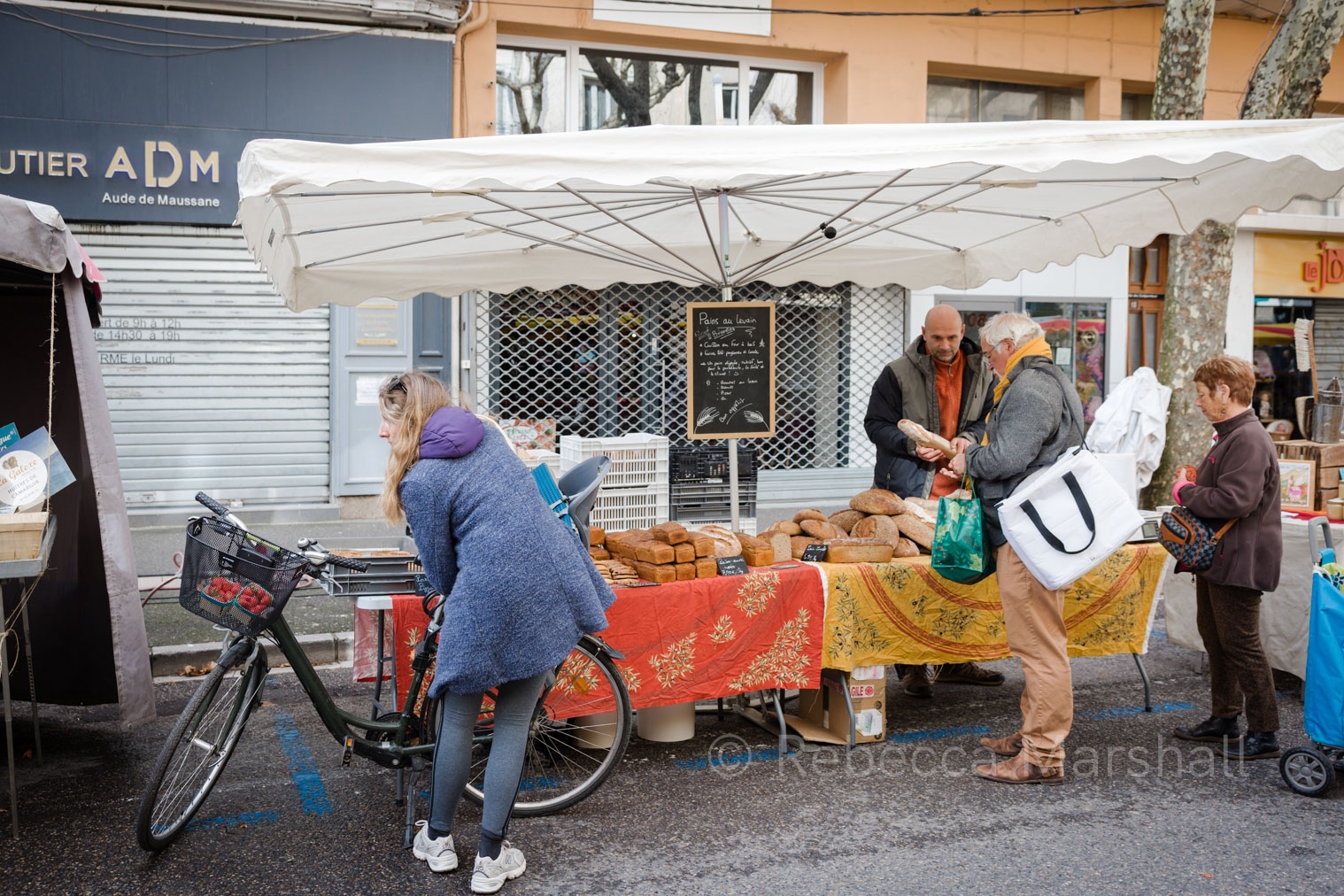
A market stall doesn’t need a name to be popular
Batman’s headquarters
A few days – and some splendid sandwiches – later, I drove up a stony, hillside track above the hamlet of Brunet. On reaching a farm at the end, I left the car and stepped into a warm, unexpectedly modern, bakery building, to photograph Benoît and Matthieu making their slow bread.
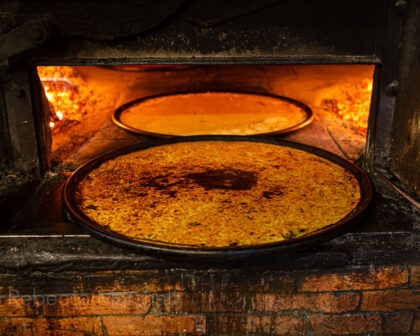
The two new business partners decided early on that a public-facing bakery would be too intense in terms of overheads, demands and pressure. So they established a sort of barter-a-bakery arrangement with an enterprising farmer for the production side. Without actually renting it, they have full use of a space with a wood-fired oven in return for the fruits of one morning’s baking each week (presumably the farmer sells rather than eats the quantity of bread they make for him that day). My question about how to refer to their ‘bakery with no name’ in photograph captions elicited some humorous embarrassment from the pair. “We really do need to get that sorted“, admitted Benoît. “Apart from ‘Batman [a somewhat surprising name for a bakery -a mash-up of their surnames, Baton and Mannino-], we haven’t given much thought to what to call our business“.
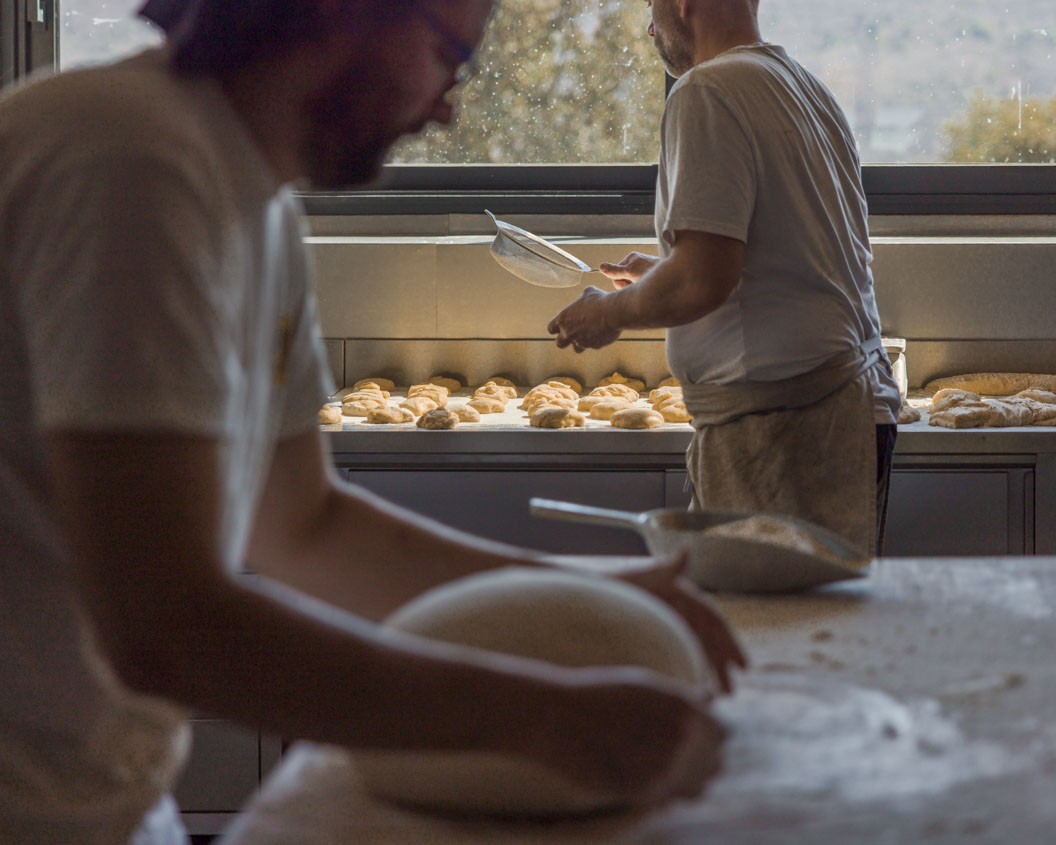
Perhaps more importantly, they only bake on three mornings a week, at a workbench from which they can see endless olive groves, cypress trees and a very big sky.
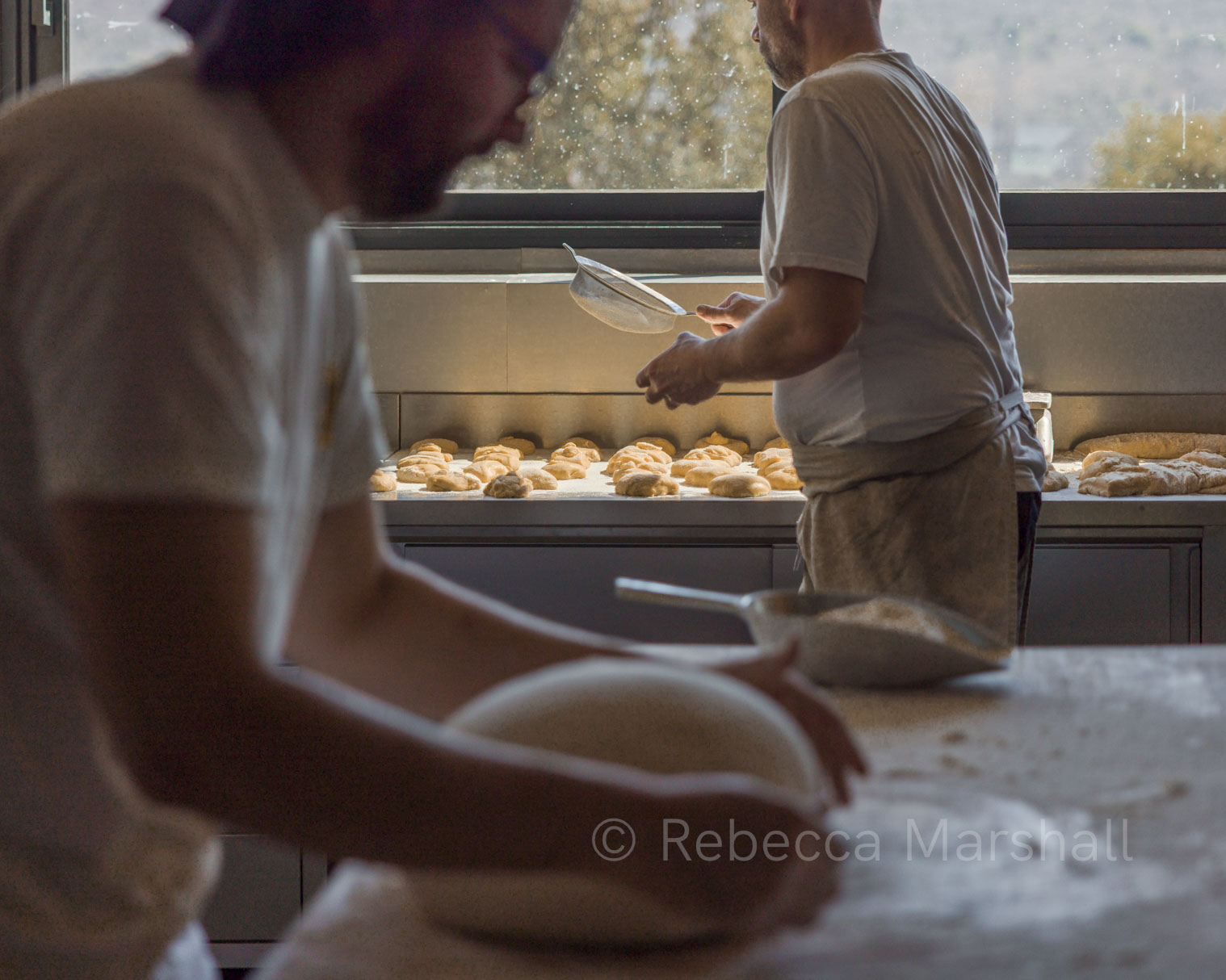
Bakers Benoît and Matthieu at work – in a room with a view
Yeast is for life
Pain au levain is… well, just slower than ‘industrial bread’. Quality trumps both quantity and speed in this kitchen. The term pain au levain is often literally translated as ‘sourdough bread’, but I find it a misnomer. In France, levain refers to the natural fermentation process itself: all dough grown from a wild yeast culture. Unlike a stereotypically large, dark, sour-tasting loaf, pain au levain comes in a myriad of different forms. The basic dough contains only flour, salt and water: yet it can be white or wholegrain; plain bread or brioche; round, oblong from a tin, or rolled into a cylinder The magic is that the yeast is alive. Like any living thing, the levain [yeast starter] responds to its environment – and so the bakers respond, adjusting the baking process, water temperature and timings according to the season and the weather (storms, for example, accelerate the rising speed of dough). A baker can keep their base culture alive – feeding, caring for it and drawing from it each time they bake- for their entire working lifetimes. (Who needs a tamagotchi?)

Dough: working with a living entity
Gut-friendly gluten
Back in the mists of time, the main cereal grown around here, in the harsh, high mountains where Provence meets the Alps, was petit épeautre (small spelt). Motivated by ancestral country wisdom, Benoît points out a petit épeautre loaf ready for the oven, and starts enthusing about the subject that he enjoyed best during his training course: ancient varieties of wheat. “It would be a dream for me to grow wheat for all our breadmaking needs.” He hasn’t got very far with this yet, though. Available agricultural land is scarce, and he explains it can be difficult for néoruraux to obtain it from locals (who like to keep things in the family). But his early attempts on a tiny plot of borrowed land have borne fruit. Benoît successfully grew a local variety of wheat called Saisette de Provence and he and Mathieu make a handful of – highly popular – loaves from its flour every week.
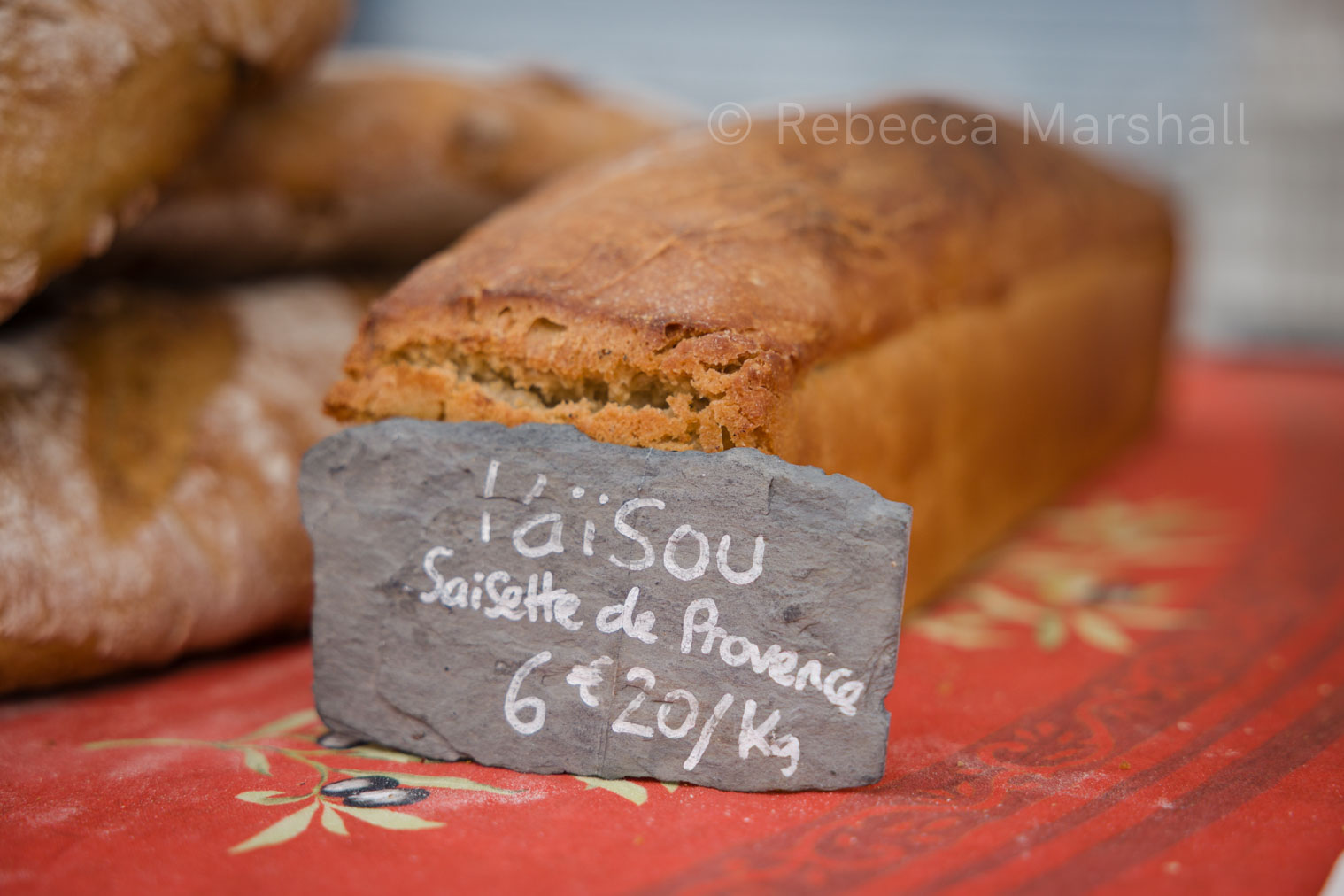
A loaf made from the wheat that Benoît grew
“More and more of us struggle with gluten, yet when we try ancient varieties of wheat, we find bread that is far easier to digest, and much tastier! It’s a tragedy that these old varieties are dying out, just because the industry favours a few, intensively-bred kinds of wheat that produce quick, high-volume bread.” It’s not that old strains of wheat have less gluten; in fact, they contain more — but it’s a more nutritious, shorter-chain kind that doesn’t overwhelm our stomachs in the same way.
The sound of ready bread
All morning, I photographed Benoît and Mathieu as they glided through the choreography of simultaneously making a selection of different pains au levain. After mixing the dough, they held, stretched, brushed and folded giant portions of it, before gently setting these down to rise – each round of activity and rest increases the dough’s life and strength. After the shaping of the loaves (and another short rest), came the hot, heavy job of loading them into the oven via a huge wooden shovel. I had imagined that there would be a fixed baking time, to stick to without question, yet the oven was fuelled by wood (mainly oak trees from the farm’s wilder corners) and can be capricious, needing fuelling every few minutes. After each wave of baking, the bakers turned a couple of steaming loaves over and knocked with floury knuckles on the underside, craning their heads in to listen carefully for the – to me, indistinguishable – sound that meant they were cooked through.
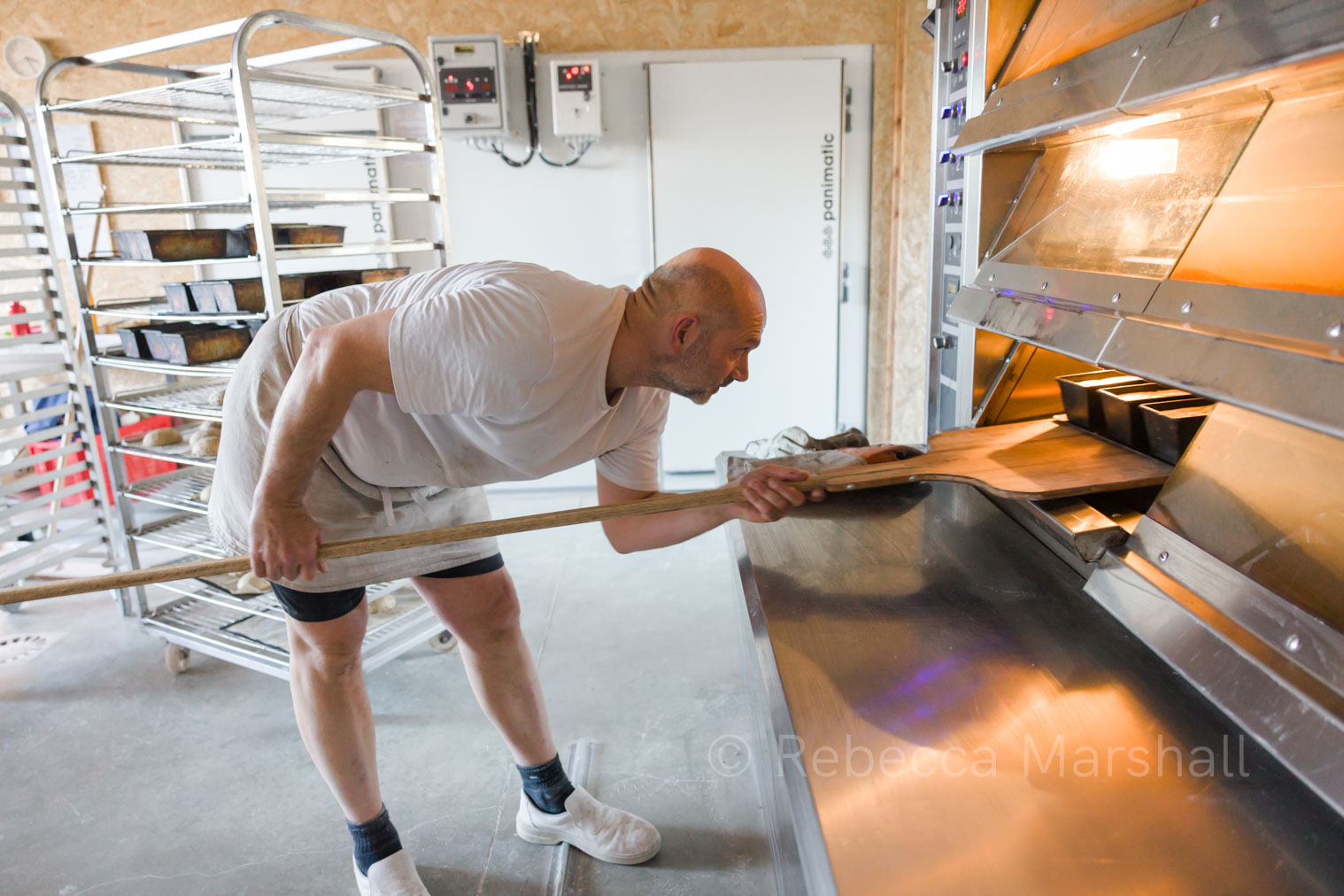
Bakery style and a very hot oven
Croissants? No thank you, we’re French!
I was surprised to notice that croissants, the celebrated French breakfast staple (and subject of another of my reportages as photographer in Nice) did not seem to figure here. Yet I quickly realised it wasn’t a welcome subject to raise. “Croissants?!? They were a commercial invention, not traditionally French at all! And they’ve only been around for 100 years!” The subject of the famed French stick got no better a response from these passionate bakers. “Baguettes?! Oh là là!! They were invented when they built the Métro in Paris, for the workers!” If it was authentic, traditional French bread I was after, I must throw all my distasteful, misguided clichés out of the window ,and look instead at their large, round, wholewheat loaves, gently browning in the oven.
Benoît and Mathieu’s disdain for commercialism and their decision not to invest in a public-facing bakery has not stopped them from building up a steady business. Word-of-mouth is powerful, and it has spread like butter around their bread. The pair deliver to a couple of local organic shops, and they sell all the loaves they pile onto two small trestle tables at the market every week. Throwing a middle finger up to Macron’s drive for an ever-more productive France, they don’t dream big. In fact, they don’t really want work to haunt their dreams at all. Forty good loaves in a day is enough.
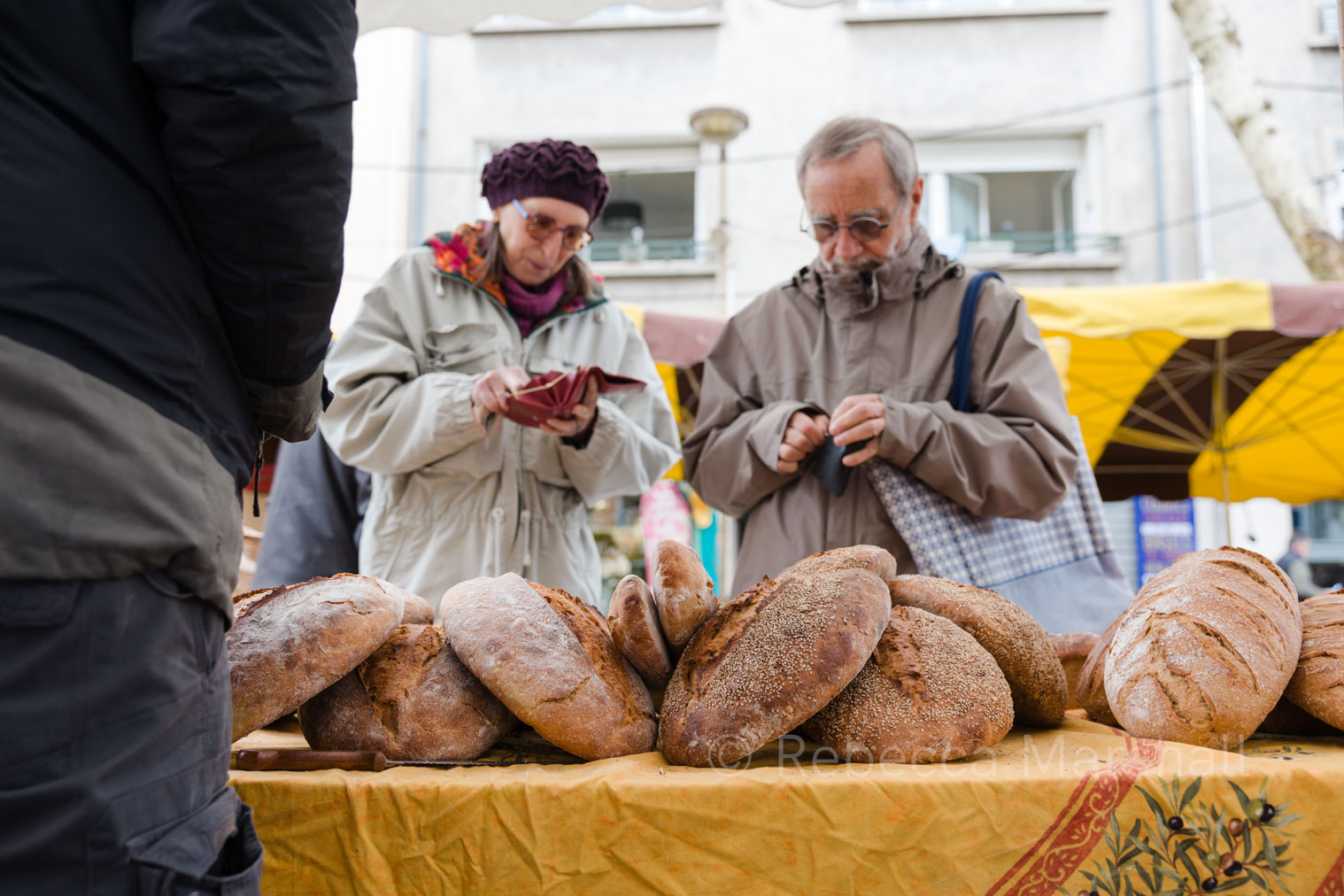
Cash obligatory. This bakery does not take cards.
Was it the smell of the bread? My own attraction toward slow living? Or even a beyond-the-grave nudge from my great-grandfather, who’d been a baker in Scotland? I don’t know, but just before I left, I surprised myself by asking whether Benoît and Mathieu could spare a little jar of levain, their living yeast culture. I’d never made my own bread before, but it was time to try. So I did…