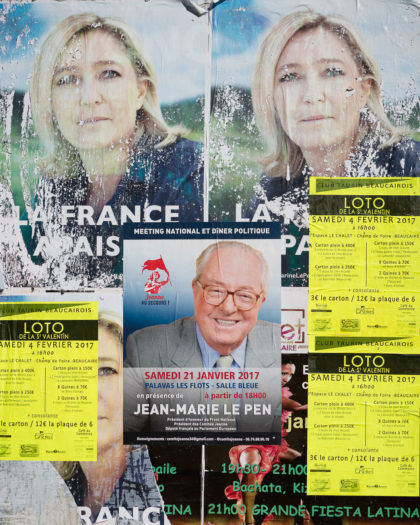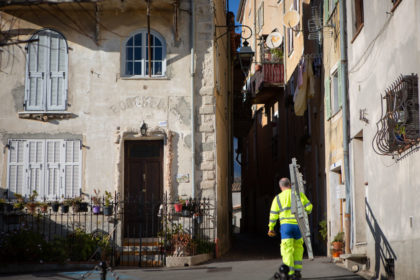
Nice has just catapulted itself into the French political spotlight – for what some would say are all the wrong reasons. In municipal elections ten days ago, Eric Ciotti, Rassemblement National ally, took up the reins at city hall. His decisive victory over the outgoing mayor means that for the first time in modern history, a far-right mayor now governs one of the 10 biggest cities in France.
One neighbourhood in Nice certainly won’t have welcomed this news. Shaped by decades of immigrant housing policy, l’Ariane has more than its fair share of social problems – nearly half of the residents live below the national poverty line. Most French Riviera-dwellers have never set foot there – why would they? Isolated on the north-eastern edge of Nice, sandwiched between motorway and mountains, l’Ariane is best known by reputation alone – a media-influenced image of crime, insecurity, and exclusion. In the run-up to these elections, Hyphen, an online Muslim magazine, asked me to make portraits and street photography there, for a hopeful feature on its growing grassroots political engagement and a new sense of community optimism. Now, however, the title, ‘Young, French and Muslim: the new electoral force to be reckoned with’, falls rather flat.
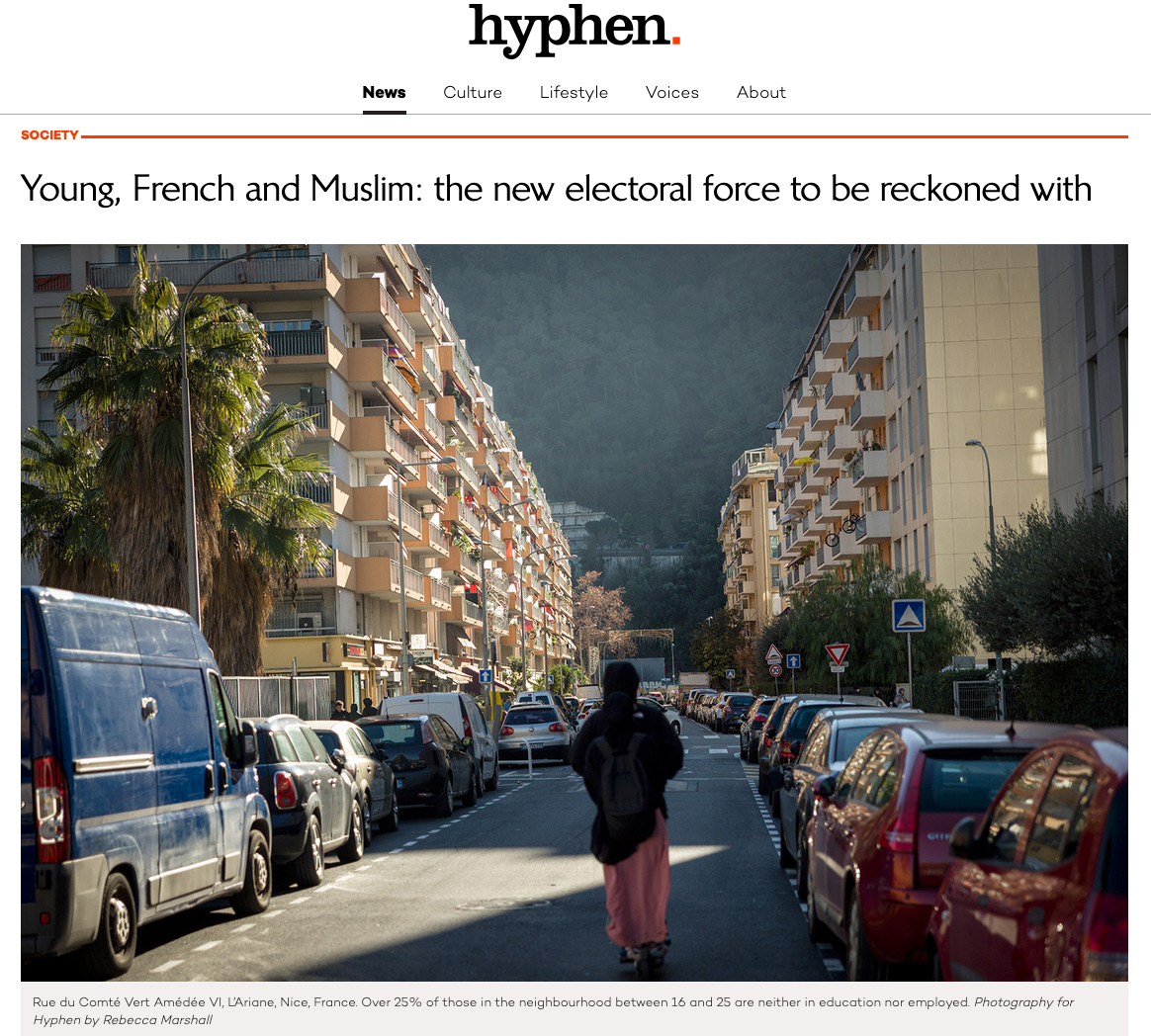
Hyphen: a leading media platform on Muslim life in Europe
Where the city’s waste burns
To begin the day, I set out to make a photograph that would show Ariane’s setting. However, on a quiet street in the rather bijou neighbourhood of Cimiez high above, I struggled to get a clean view over villa roofs and garden walls. If the gentleman returning from a morning baguette run was surprised to see a photographer at his door, asking to access the decking of his front terrace, he didn’t show it.
“What is that chimney pumping smoke in front of the apartment blocks?” I asked, as I leaned my camera on the banister and looked down over the valley below. It turned out that before he retired, he worked there. “It is a waste incineration facility. All the household waste from the entire city of Nice is taken there to be treated. It burns day and night.”
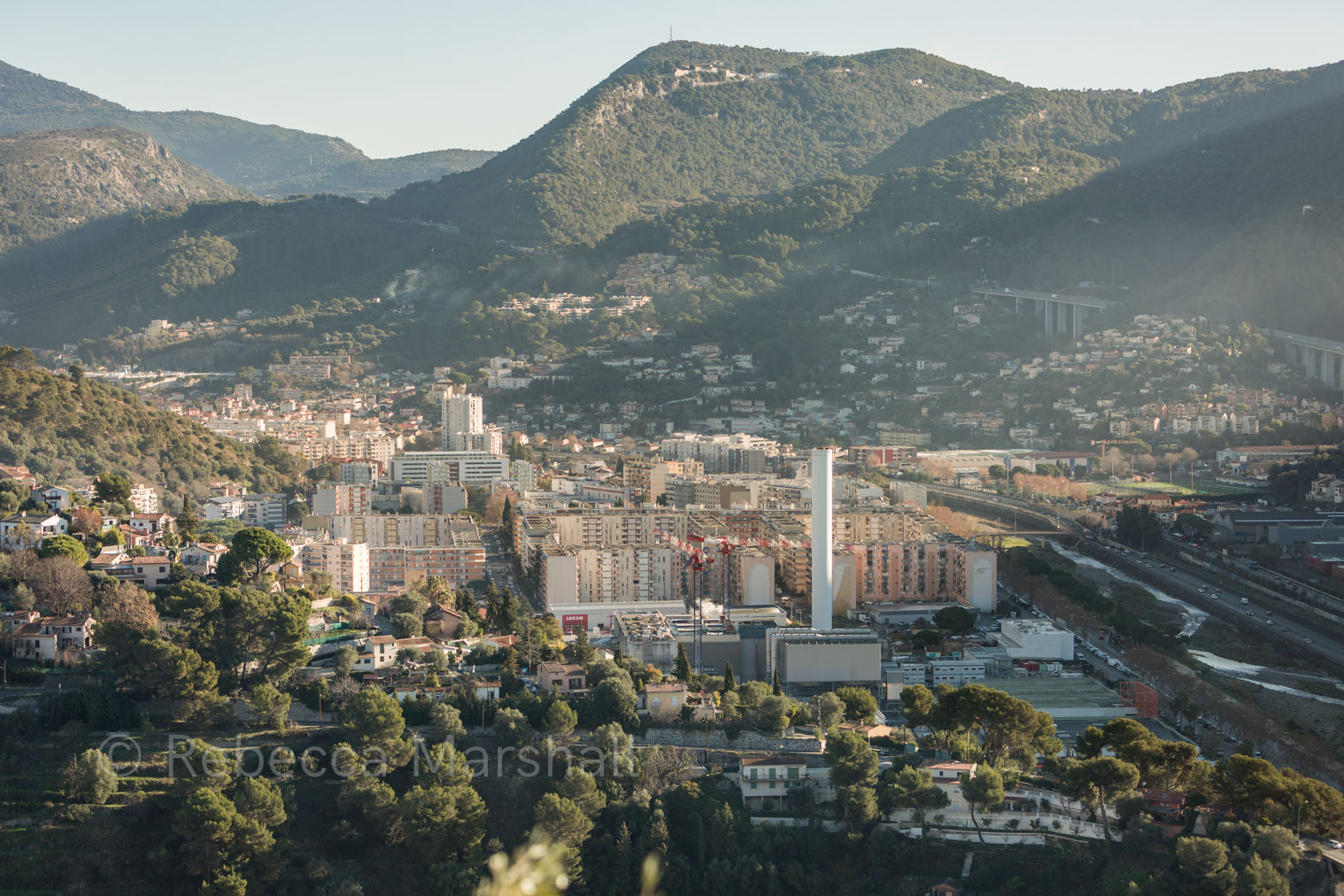
L’Ariane lies somewhere between Nice and nowhere
Mosque portrait
Down l’Ariane, my first destination was the mosque, to meet imam Obaïda Ben Salem. Prayer rooms might’ve been a better term for the complex, housed anonymously at the base of a tatty apartment building, yet I was nonetheless enthusiastic to make Obaïda’s portrait there. It’s not often that a female photographer gets the chance to enter, let alone photograph in, the male area of a mosque.
Obaïda was a quiet, warm man, patiently indulging my curious questions as he showed me around. The central room holds 1500 men at prayer and dozens of equally-spaced ‘tram’lines on the carpet keep the worshippers in an orderly placement, if somewhat up-close-and-personal. God has not one but 99 names, and they looked quite beautiful, etched in flowing Arabic on a wall plaque. I asked Obaïda if he wouldn’t mind showing me the prayer sequence that he does up to 17 times a day, and I followed his movements alongside, to see how it felt (“not dissimilar to my morning yoga sun salutations!” He just smiled.)
His was not a difficult portrait to make. Portraits on the French Riviera, especially when known personalities are concerned, generally require varying degrees of ego management. Obaïda, however, showed neither any particular attention to his appearance, nor a desire to control his self image. A man of God, I suppose, has ‘other cats to whip’ [a literal translation of d’autres chats à fouetter, a delightful French phrase to say that one has better things to concern oneself with].
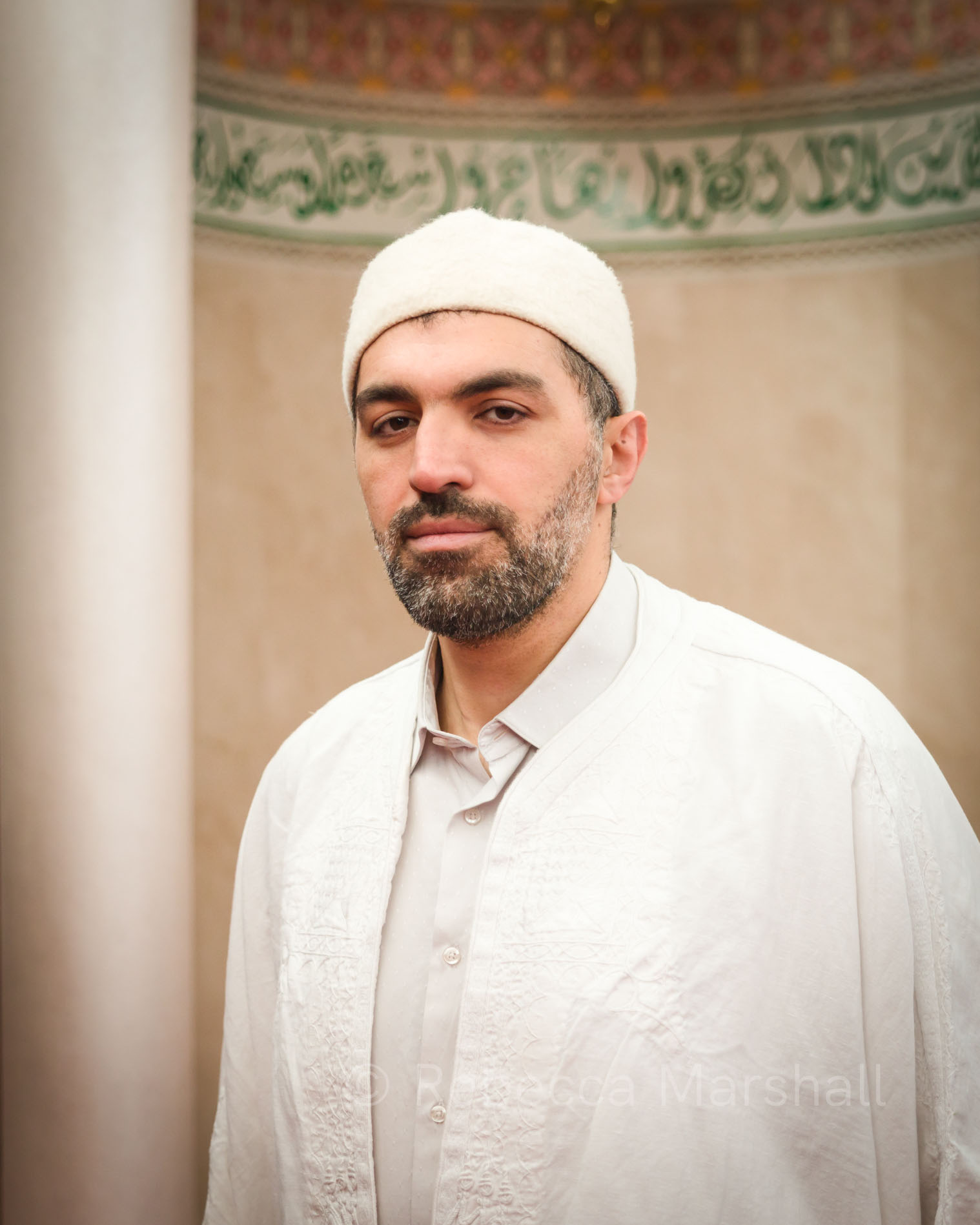
Quiet pillar of the community: imam Obaïda Ben Salem
Disconnected and invisible
After we had finished the portrait, I was to take street photographs to align with the feature and Obaïda agreed to show me around. When I first moved to Nice, it was said that even the police would hesitate before driving through l’Ariane, where projectiles would likely be thrown at them, or worse. Yet much has changed there since. A large, new commisariat de police has cut crime levels; social housing abounds, with many ‘innovative’, once-gay-now-faded, pastel-coloured apartment blocks (presumably l’Ariane was a low-visibility zone where architects -with limited means, yet big ideas that lime green concrete raises spirits- could cut their teeth) and ‘parks’ were created. These may be neither large nor numerous, and have a low ratio of trees to concrete, but it is clear overall that public investment has been made in the neighbourhood.
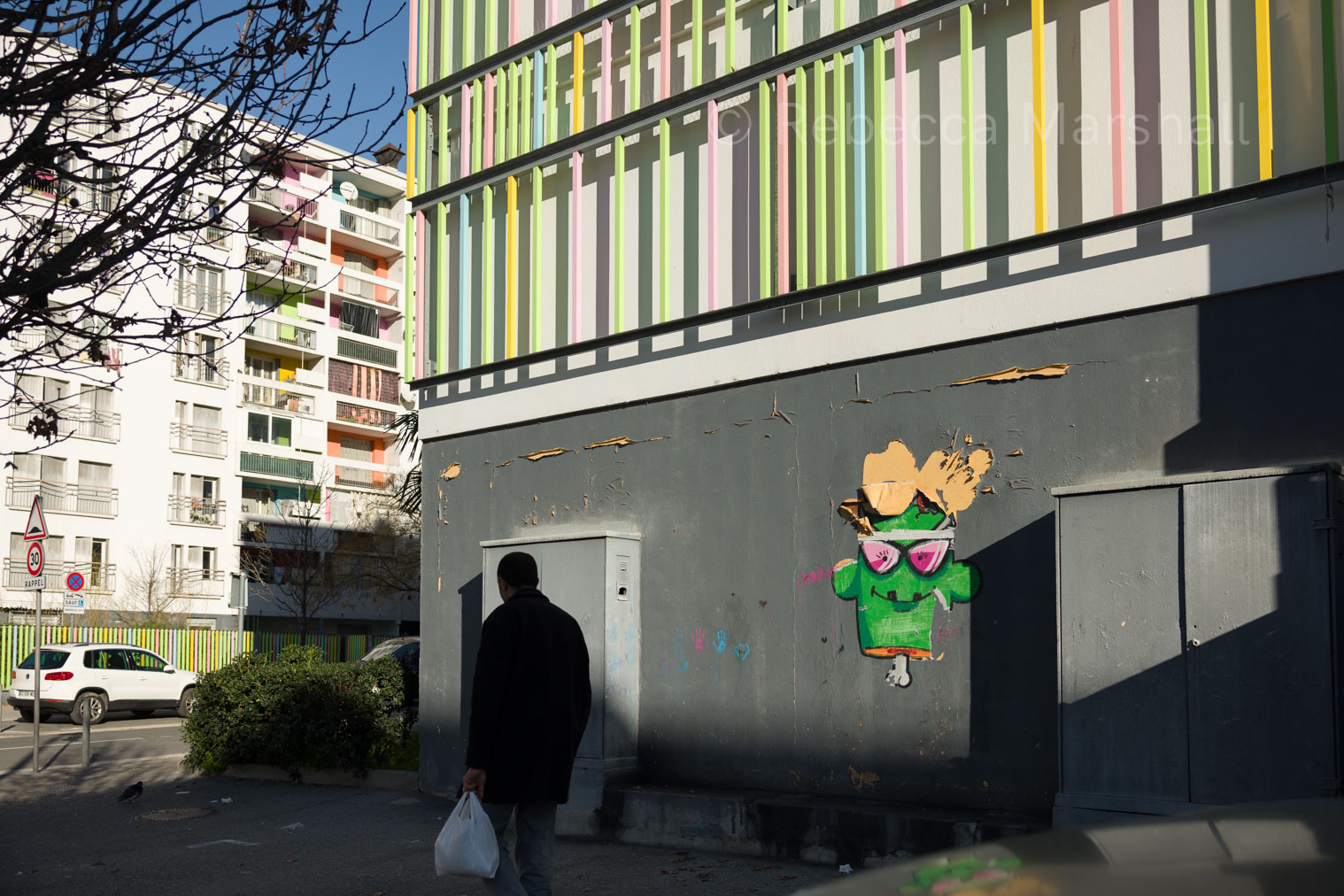
A ‘spirit-raising’ colour palette
However, with my brief to fulfil as photographer for this article, I was looking for what hasn’t changed. L’Ariane remains in many ways disconnected and invisible to the rest of the city. The 12,000 residents have been hearing empty promises about an extension of the tramway to connect them with downtown Nice for many years. Buses are few and offer limited routes. There are countless stories of lifts breaking or hot water not functioning in social housing, and these things taking forever to get repaired. When I came to write the captions for my pictures, the Bermuda triangle sprung to mind as I struggled – and failed – to find on Google Maps the shops, cafés and other local businesses that I had photographed.
I talked with Obaïda about Tunisia’s Jasmine revolution in 2011 and the portraits of immigrants I had made back then on the Italy-France border, and on the outskirts of Nice. What was the make-up of the population here in l’Ariane itself, I wondered? “These days, immigration is no longer majority North African – it is the Chechens who run this joint now.” (Nice is indeed home to one of the largest Chechen communities in France).
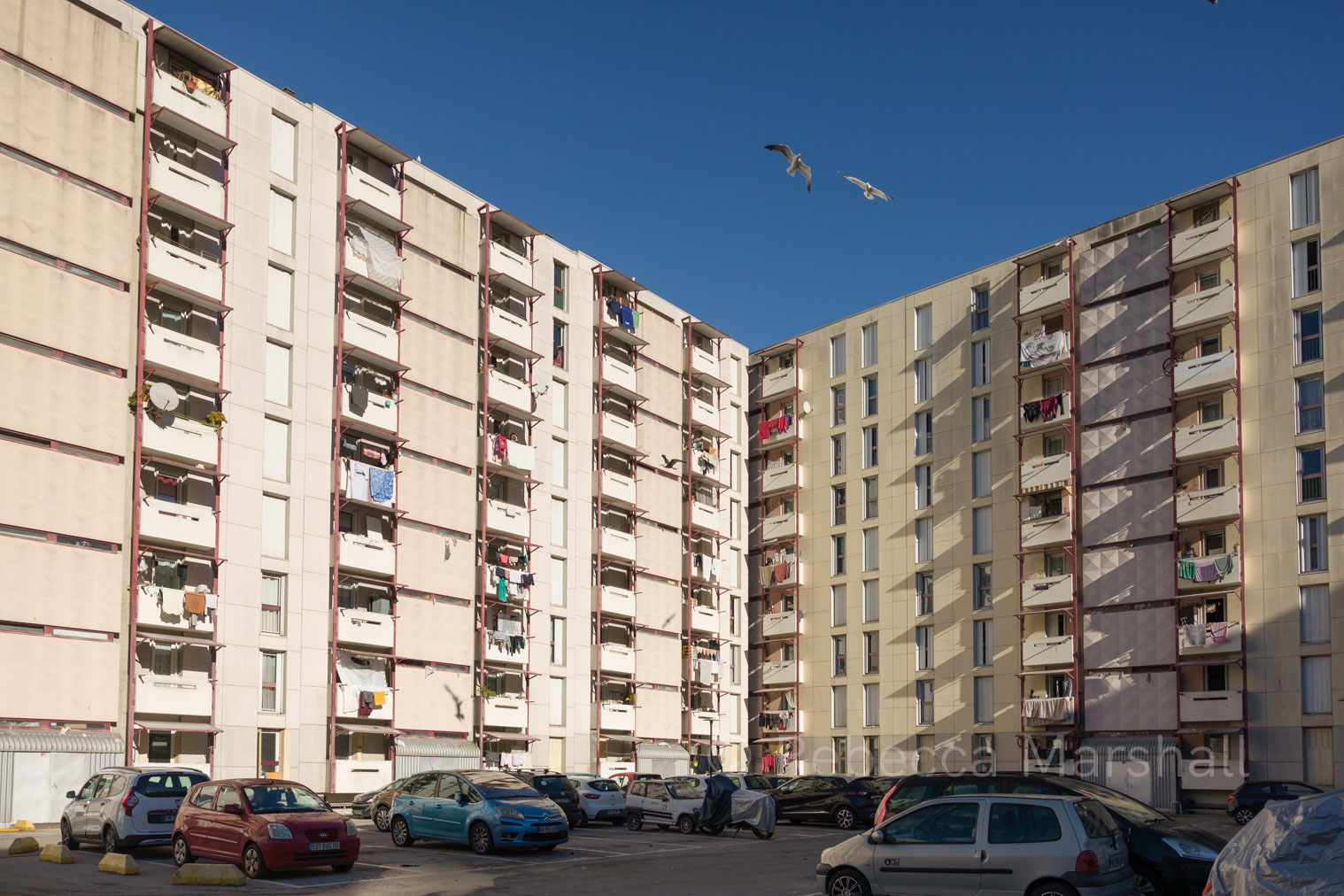
One of l’Ariane’s first housing blocks
If he was reluctant when I asked him to show me how to get into the central yard of one of the original tower blocks, Obaïda didn’t show it. Hurriedly erected in the aftermath of the Algerian war in the 50s and 60s, each unit consists of giant walls of 9 stories of flats built in a four-sided square – with neither gap nor public entrance. We had to wait for a dark steel door to open and a car to come out of the underground acces ramp before we could sneak in on foot. Coming up on the inside, we found ourselves in a giant car park that occupies the central space. Lacking any greenery at all, and with every apartment looking across, up, down, right and left into a dozen others, it felt deeply claustrophobic and unsettling… as it also was when, returning to the underpass, a couple of hooded young men crystallised from the shadows – and told me they liked the look of my camera.
“I’m a photographer, not drugs police”
Working as a photographer in a marginalised neighbourhood can touch two points of friction. Firstly, the value of camera gear on display could represent rich pickings for an opportunist with an outlaw frame of mind. Secondly, a photographer with a long lens doesn’t go down well if she/he inadvertently points it at illegal persons or illegal behaviour. I’d been taking a photograph down a street, unaware that the group of men in the distance were, judging from their subsequent aggression, engaged in an activity that they didn’t want recorded for posterity. On noticing me, one chap ran down the street towards me, yelling “OI! You can’t take my picture!!!!“; another gave the game away, bellowing “Are you drugs police??” It was the third time I’d been accused of being a policewoman that day, and if I had been mildly amused earlier, now I felt intimidated. I had been so far away that you could barely make out the figures, let alone recognise individuals, in the photos. This turned out to be fortunate, as I quickly found myself surrounded and the group ringleader demanded to see the back of my camera. The question he asked was rhetorical, “What would you do, if I grabbed your camera off you and smashed it on the floor??”
Under the benevolent gaze of election posters for the socialist ‘Nice Front Populaire’, a woman who was waiting in line for the food aid centre to open also made her dislike of my presence clear. The repeated climax of her long, loud speech was that she would “massacre me” if her picture appeared anywhere. My reassurances that I had not -and would not- photograph her, and the imam’s calming tone, did little to stem her tirade.
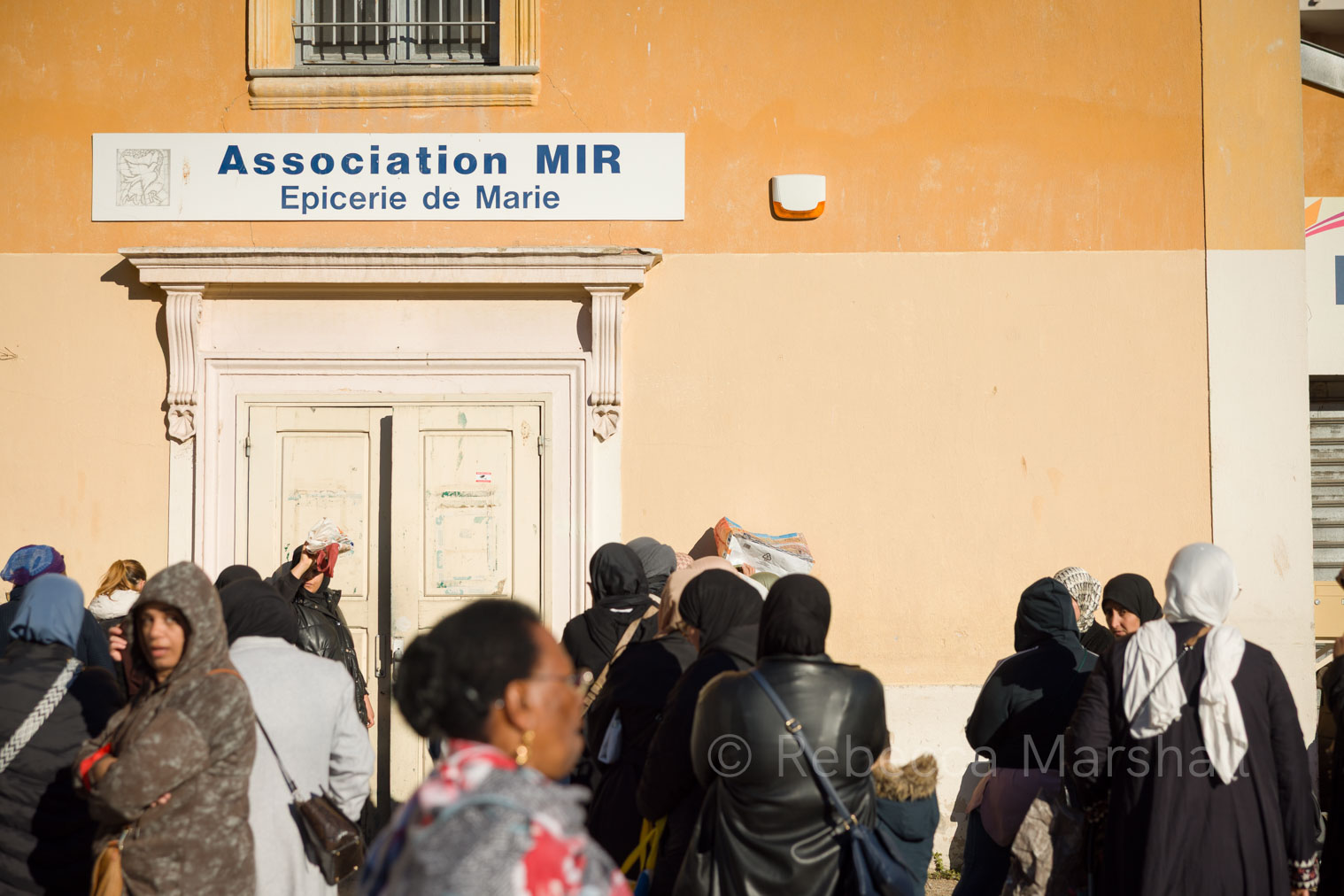
Aid recipients wait for a food distribution centre to open its doors
The face of grassroots change
While being a photographer I had met an unwelcoming side, I could still see signs of the strong community that Obaïda and the journalist had described. At every corner, passers-by warmly greeted their imam, people sat together in companionship and I heard how much neighbours try to help each other here – perhaps logical in a zone that tends to be shunned by outsiders.
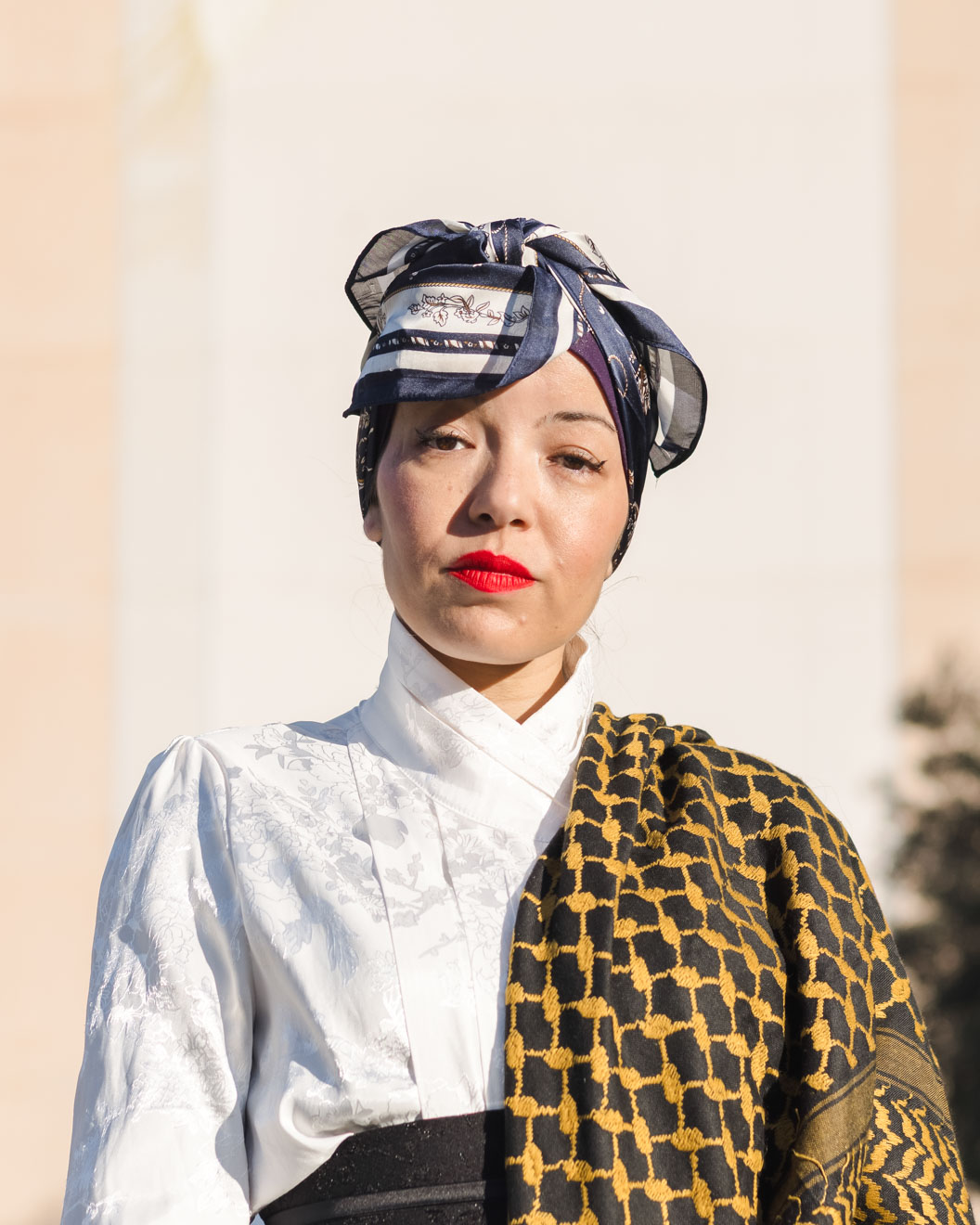
After saying goodbye to Obaïda, I had a last rendez-vous with an extraordinary young woman, Nawel Boumehdi. No stranger to media, Nawel is an engaging spokesperson for the l’Ariane community. A citizen participation organiser, she is also president of a local cultural association, which organises such diverse activities as a cinema club, ‘Apéritif littéraire‘ events to present the likes of Kafka or Dostoevsky (the latter was a bilingual conference, presented both in Russian and French) and an ‘anti-homophobia evening’. This she does only in her free time, when she is not busy with her day job in the building trade.
“You can park here. With a bit of luck, your car might even still be here when we get back“, said Nawel, with a twinkle in her eye. I made some portraits of her at the entrance to l’Ariane, as the winter sun’s rays were lengthening and casting the towers behind her in a warm, kindly light. Colourfully dressed in a striking, unique outfit, she held herself with great presence in front of my camera. With people like Nawel speaking for, inspiring and empowering this community, hope for grassroots change will not be lost – regardless of the change in guard at city hall.
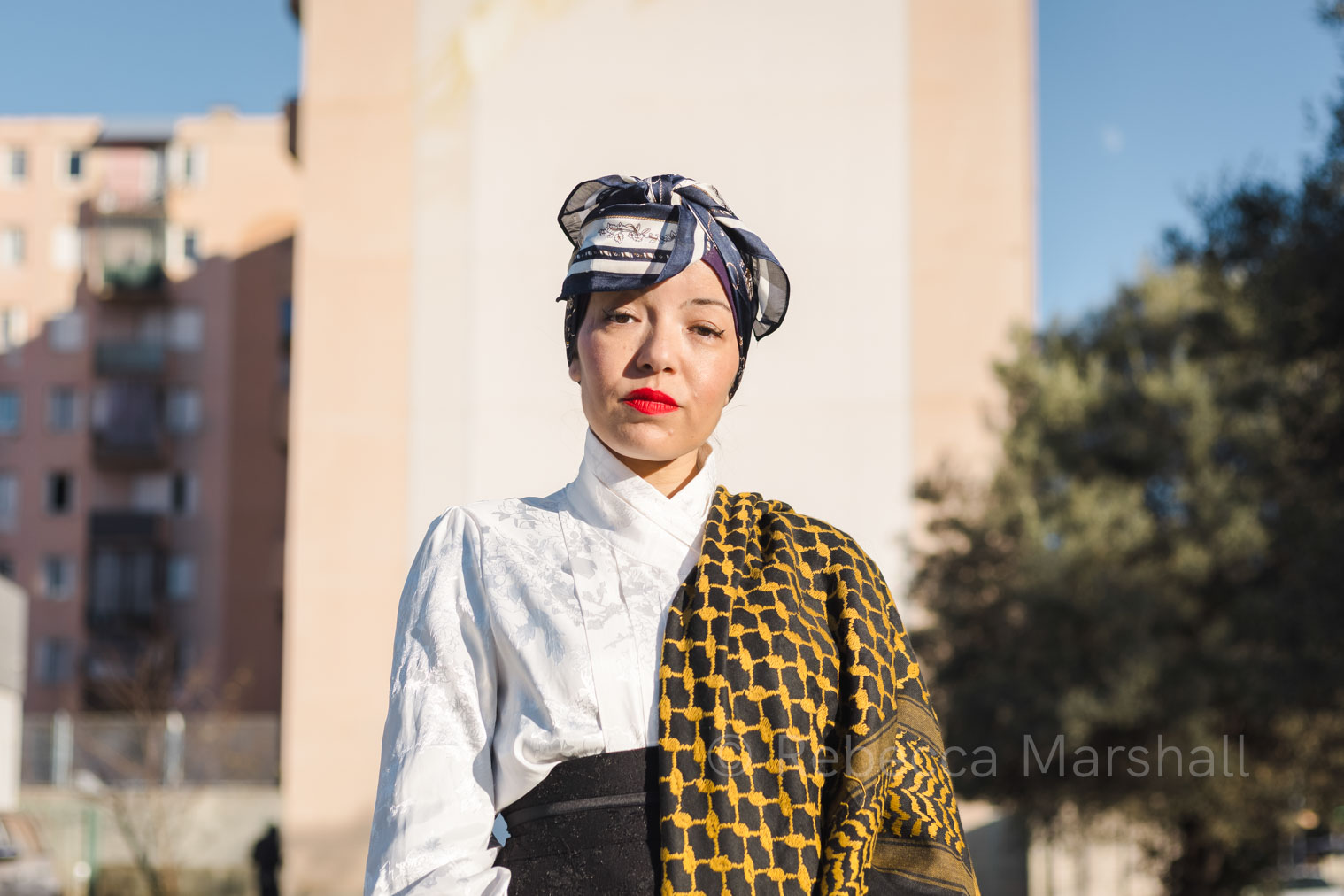
Nawel Boumehdi, at the entrance to l’Ariane
> See Reportage portfolio